KORC
The Knock Out Rat Consortium (KORC) is formed by individuals and institutions interested in the goal of creating knockout rats using multiple different technologies. Knockout rats can be used for functional genomics and also for drug discovery.
Mission Statement
- The mission of the KORC is to create rats with single gene disruptions (knockouts) using all available technology.
- Our goal is create at least one rat with a null mutation corresponding to every gene in the rat genome.
- We will create all mutations on the same background strain of rat, namely Fischer.
- Each knockout will be bred into at least one male rat, which will be sacrificed for tissue collection and cryopreservation of sperm.
- Cryopreserved sperm can be used to create knockout rats with specific null mutations by the process called intracytoplasmic sperm injection (ICSI).
WHY RATS?
Rat models are an alternative to mice that may enable the creation of new gene disruptions that are unavailable in the mouse. These models will complement existing transgenic mouse models. Comparing mouse and rat models can allow the distinction between rodent-specific and general mammalian phenotypes. Although mice have been the animal model of choice for most geneticists, the rat has traditionally been favored by physiologists and pathologists. In many applications the rat is a better animal model for human disease. Their larger size make rats more conducive to study by instrumentation, and facilitates manipulation such as blood sampling, studying nerve conduction or performing surgery. In addition, rats have a physiology more similar to humans than mice do. For example, rats have a heart rate similar to that of humans, while mice have a heart rate five to ten times as fast. Rats have been used as important models for human cardiovascular disease, diabetes, arthritis, and many autoimmune and behavioral disorders. Rat models are superior to mouse models for testing the pharmacodynamics and toxicity of potential therapeutic compounds, partially because the number and type of many of their detoxifying enzymes is very similar to those in humans. For all of these reasons, the rat is an important model for human disease and can be used by academic researchers and pharmaceutical companies for functional genomics and drug discovery.
Useful Options
Stunning visualizations of your data
State-of-the-art laboratory facilities
Revolutionary scientific breakthroughs
How to register a rat strain
Rat strain information should be submitted to the RGD Database. When submitting, please follow RGD's strain nomenclature guidelines.
RGD also accepts bulk data submissions independently of the above form. Please Contact Us with questions about bulk data requests.
L1 Retrotransposon
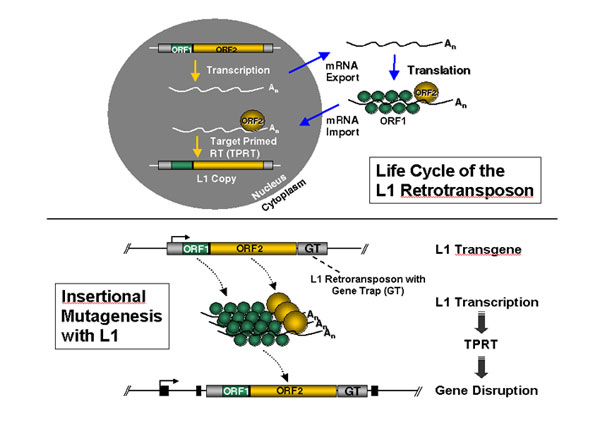
Transposons and retrotransposons serve as powerful tools for unbiased gene discovery, functioning as mobile DNA elements used for gene disruption. Retrotransposons, such as Long Interspersed Nuclear Elements (LINEs), mobilize through a "copy and paste" mechanism and are abundant across many eukaryotic species. Several L1 retrotransposons remain active in both mice and humans.
Structure and Function
L1 retrotransposons consist of:
- 5' Untranslated Region (UTR): Contains a small internal promoter that drives expression.
- Two Open Reading Frames (ORFs):
- ORF1: Encodes an RNA-binding protein.
- ORF2: Encodes a protein with endonuclease (EN) and reverse transcriptase (RT) activities, essential for the retrotransposition process.
- 3' Untranslated Region (UTR): Contains sequences necessary for polyadenylation.
Mechanism of Mobilization
- Transcription: The L1 element is transcribed from its internal promoter.
- Translation: ORF1 and ORF2 proteins are produced.
- ORF1 Protein: Binds RNA.
- ORF2 Protein: Exhibits endonuclease and reverse transcriptase activities.
- Target Primed Reverse Transcription (TPRT):
- ORF2 protein nicks a site in the DNA.
- The L1 RNA is reverse transcribed into DNA at the nick site, facilitated by ORF2's RT activity.
- Integration:
- The newly synthesized DNA is integrated into the genome.
- Integration requires a simple consensus sequence (5’-TTTT’A-3’), though variations exist.
- Integrated L1 sequences are often truncated at the 5’ end, averaging 1 Kb in total size, with many containing only 3’ terminal sequences.
Advantages and Applications
- Unlimited Insertional Mutagen: L1 elements provide a continuous supply of insertional mutagens due to their ongoing transcription from the internal promoter.
- Widespread Genomic Coverage: L1 insertions exhibit a largely random distribution, offering extensive genomic coverage.
- Irreversible Integration: L1 insertions are permanent, effectively "tagging" any mutagenic events with L1 sequences.
- Applications: Ideal for generating large numbers of mutations in single cells, useful for gene discovery and functional genomics studies.
Overall, the unique properties of L1 retrotransposons make them invaluable for genetic research and mutagenesis applications.
Sleeping Beauty Transposon
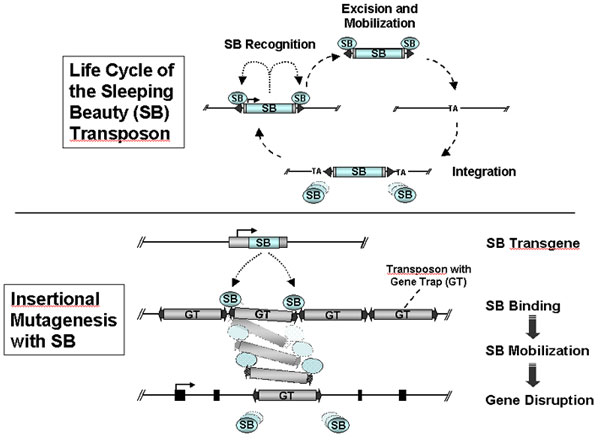
The Sleeping Beauty (SB) transposon is a member of the Tc1/mariner superfamily of DNA transposons, originally derived from inactive transposons found in the salmonid subfamily. Unlike endogenous DNA transposons in vertebrate genomes, SB has been engineered to be active, making it a valuable tool for genetic research, particularly in vertebrate species.
Structure and Mechanism
- Origin: Derived from the Tc1/mariner superfamily of DNA transposons, specifically from inactive elements in salmonid genomes.
- Mechanism: SB transposon mobilizes via a "cut-and-paste" mechanism facilitated by a transposase enzyme encoded within the transposon itself.
- Transposase: The 340 amino acid SB transposase recognizes and binds to inverted terminal repeats (ITRs) flanking the transposon.
- Excision and Integration: Transposase catalyzes the excision of the transposon from its original location and integrates it into random sites within the genome.
- Target Site Requirements: Integration typically requires a TA-dinucleotide at the target site, a characteristic shared with other Tc1/mariner transposons.
Applications and Advantages
- Insertional Mutagenesis: SB transposon is widely used for insertional mutagenesis in vertebrate species.
- Gene Discovery: Advantages include:
- Genomic Insertion Bias: SB shows little bias for specific genomic regions or recognition sequences, enhancing its utility for random mutagenesis.
- Marker Tagging: De novo insertions act as "tagged" sequence markers, simplifying the identification of specific mutations via PCR cloning methods.
- In Vivo Mutagenesis: Enables rapid generation of multiple mutations within a single animal or tissue, such as in adenomatous polyps in mice and rats.
Utility and Research Impact
- Germ Line Mutagenesis: Particularly effective for generating mutations in the germ line of mice and rats.
- Versatility: SB's ability to induce mutations without strong genomic preferences makes it versatile for various genetic studies and functional genomics.
Overall, the Sleeping Beauty transposon represents a powerful tool in genetic research, offering researchers a flexible and efficient method for conducting insertional mutagenesis and exploring gene function across vertebrate genomes.
CONSORTIUM MEMBERSEric M. Ostertag, M.D., Ph.D. (Transposagen Biopharmaceuticals Inc.)
Dr. Ostertag completed his undergraduate training at the University of Wisconsin where he received a B.S. in Genetics with Honors. He went on to do both M.D. and Ph.D. (Molecular Biology) degrees at the University of Pennsylvania. His doctoral thesis work was performed in the laboratory of Dr. Haig Kazazian on the biology of the human L1 retrotransposon, which included the development of the first mouse model of L1 retrotransposition. He later completed a residency program in Clinical Pathology and a Fellowship in Transfusion Medicine at the Hospital of the University of Pennsylvania. He is the founder and CEO of Transposagen Biopharmaceuticals, Inc.. While at Transposagen, Dr. Ostertag secured greater than $2.4 million in early stage funding from regional networks and the NIH. He is one of the co-inventors of Transposagen's technology and has published nearly twenty peer-reviewed articles and reviews in the field of mobile elements.
Haig H. Kazazian, M.D. (University of Pennsylvania)
Dr. Haig Kazazian is a world-renowned human geneticist who received his undergraduate degree at Dartmouth College and medical degree from Johns Hopkins University (JHU). He trained in Pediatrics at JHU and the University of Minnesota. After genetics research training at JHU and the NIH he joined the faculty in Pediatrics at Johns Hopkins in 1969. He rose through the academic ranks to Professor in 1977, and became Director of the Center for Medical Genetics in 1988. In 1994, he left JHU for the Chair of Genetics at the University of Pennsylvania (Penn) School of Medicine. After a distinguished career as Chair, he stepped down in 2006 and is presently the Seymour Gray Professor of Genetics at Penn. He is a member of a number of professional organizations, including the Association of American Physicians, the Institute of Medicine of the National Academy of Science, and the American Academy of Arts and Sciences. He has published some 350 scientific papers. In the course of his work on hemophilia, Dr. Kazazian discovered that transposable elements are active in human beings and cause disease through insertional mutagenesis. His laboratory's work on retrotransposition in mammals was the basis of the initial technology licensed by Transposagen, and his laboratory continues to collaborate with Transposagen with the goal of using L1 retrotransposons for mutagenesis in rats.
Blair B. Madison, Ph.D. (Transposagen Biopharmaceuticals Inc.)
Dr. Madison completed his undergraduate studies at Washington University in St. Louis, receiving an A.B. in Biology with High Honors. He then went on to complete a one-year Pre-doctoral Intramural Research Training Award (pre-IRTA) fellowship at the National Institutes of Allergy and Infectious Diseases (NIAID) at the National Institutes of Health (NIH). Following this, Dr. Madison completed his Ph.D. in Cellular and Molecular Biology at the University of Michigan. There he received two competitive fellowships and several awards. At the University of Pennsylvania, Dr. Madison commenced his post-doctoral research with Drs. Klaus Kaestner and Haig H. Kazazian and received a Ruth L. Kirschstein National Research Service Award (NRSA) from the NIH for a project he designed on mobile element mutagenesis. Dr. Madison has published twelve peer-reviewed articles and reviews, many in the field of animal models.
Jef Boeke, Ph.D (Johns Hopkins University)
Dr. Boeke has studied retrotransposons for 25 years and, together with David Garfinkel, was the first to show the existence of retrotransposition through an RNA intermediate. He coined the term "retrotransposon". More recently, the Boeke lab has pioneered the use of synthetic mammalian retrotransposons in vitro and in vivo. The retrotransposon ORFeus (a synthetic version of the mouse LINE-1 sequence) shows relatively high frequency retrotransposition in both somatic and germ line tissues of the mouse. Several approaches for controlling ORFeus retrotransposition in animals are being explored. ORFeus is being tested in the Boeke lab for activity in the rat through a research collaboration withTransposagen.
David Largaespada, Ph.D. University of Minnesota
Dr. Largaespada's laboratory is working to exploit insertional mutagenesis for cancer gene discovery. A mouse model of murine leukemia virus induced acute myeloid leukemia is being used to identify and characterize genes that have a role in myeloid leukemia development. Dr. Largaespada is focusing on genes that co-operate with known human leukemia gene mutations, including loss of the Neurofibromatosis type 1 gene and expression of the AML1/ETO fusion gene. Ongoing work also includes genetic studies of myeloid leukemia chemoresistance and relapse using mouse models. In addition, the Largaespada lab is adapting a recently constructed transposon system, called Sleeping Beauty, for insertional mutagenesis in mouse somatic and germ line cells, as well as for gene therapy.
Howard Jacob, Ph.D. (Medical College of Wisconsin)
Professor Jacob received his Ph.D. from the University of Iowa in 1989. After joint post-doctoral work with Victor J. Dzau, M.D. and Eric S. Lander, Ph.D., he received a 1992 appointment as Assistant Professor at Harvard Medical School/Massachusetts General Hospital. Dr. Jacob joined the Medical College of Wisconsin in 1996 as an Associate Professor in the Department of Physiology and became a full Professor in 2001. He was appointed Director of the Human and Molecular Genetics Center and awarded the Warren P. Knowles Chair of Genetics in 1999. Dr. Jacob's research interests have always focused on using cutting-edge technologies which center on physiological genetics, genetic dissection and analysis of complex disease. His laboratory is known for genomics and high throughput phenotyping, as well as comparative genomics and bioinformatics. For nearly four years, Dr. Jacob has been the Chair of the Coordinating Committee for the Program for Genomic Applications (PGA). This 11 center (37 grants) program builds animal models, genomics tools and reagents, and bioinformatic tools. This program freely distributes all data and reagents to the public in advance of publication.
Aron Geurts, Ph.D. (Medical College of Wisconsin)
Dr. Geurts received his Ph.D. from the University of Minnesota in 2006 in the laboratory of Dr. David Largaespada, focusing on molecular biology and genetics. He has been in the Jacob laboratory at the Medical College of Wisconsin since June of 2006, focusing on implementing novel strategies to manipulate the rat genome. Dr. Geurts is an expert in Sleeping Beauty (SB) transposon biology. He co-developed several of the advanced SB system components and has established the transposon system as a tool for a range of functional genomics applications including reverse and forward-genetic screening, gene therapy and transgenesis in both mice and rats.
CONSORTIUM INSTITUTES
- Transposagen Biopharmaceuticals Inc.
- University of Pennsylvania
- University of Minnesota
- Johns Hopkins University
- Medical College of Wisconsin
- Others
mRNA Enzyme Provider
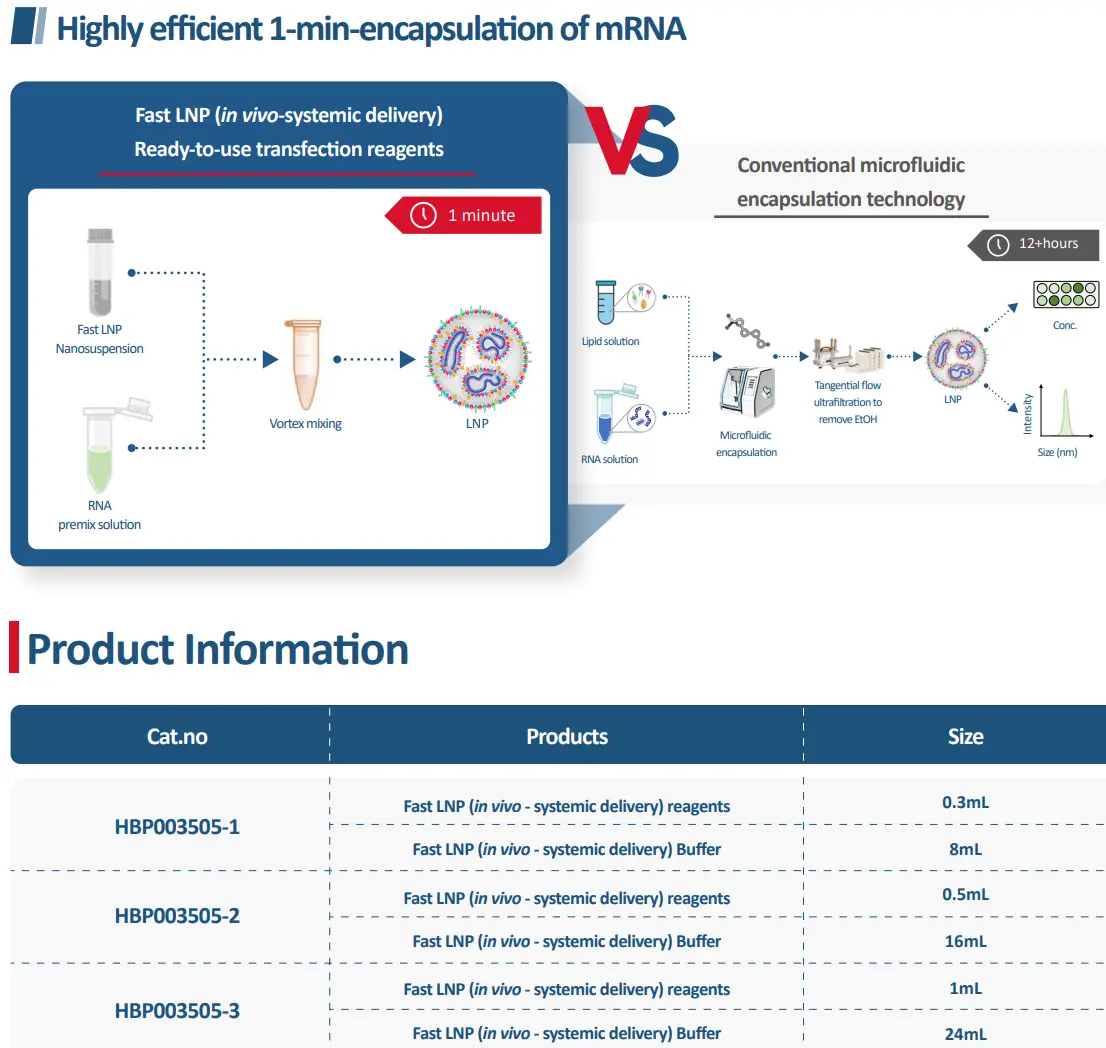
Ready-to-use LNP Kits
Fast LNP (in vivo - systemic delivery)
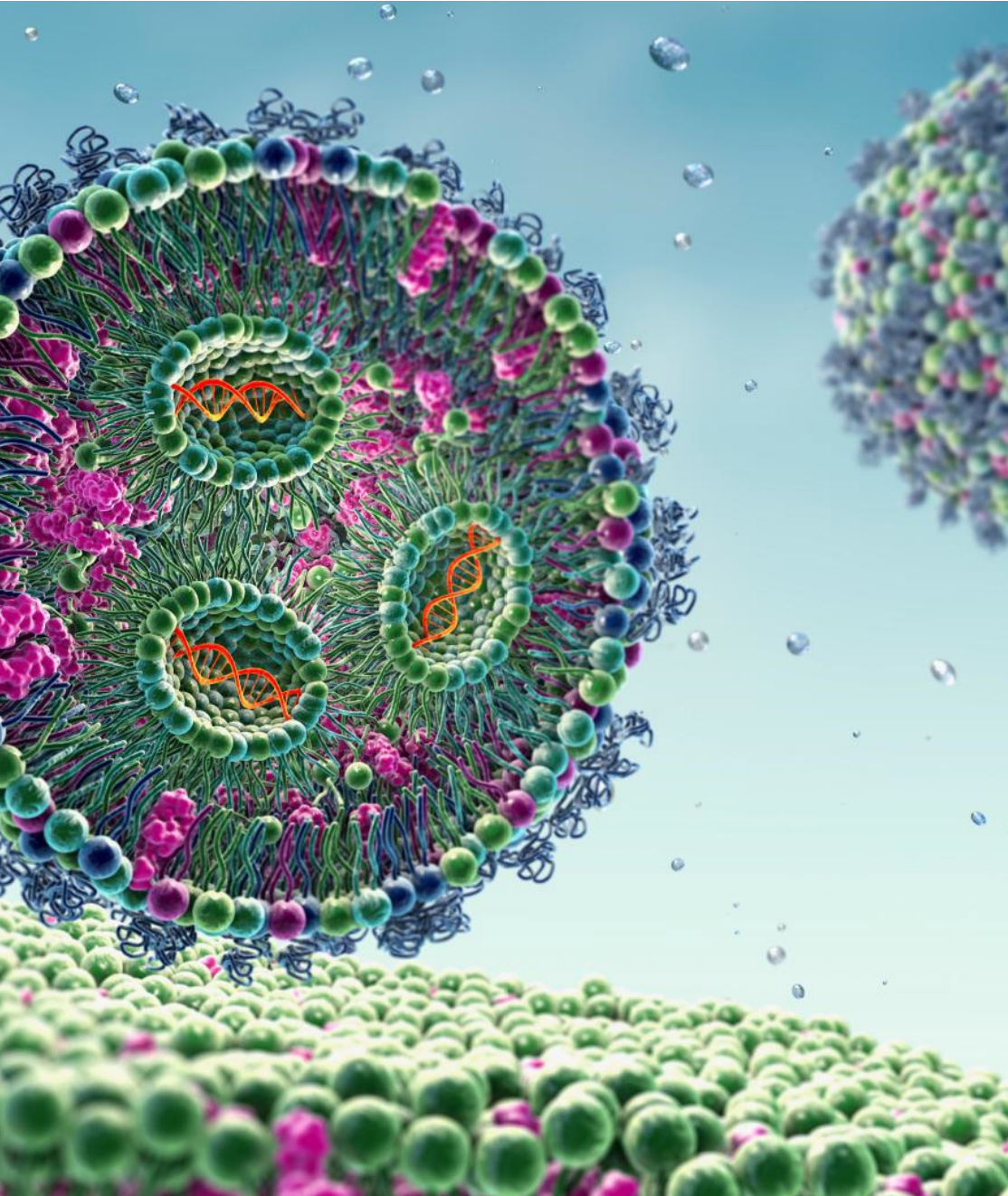
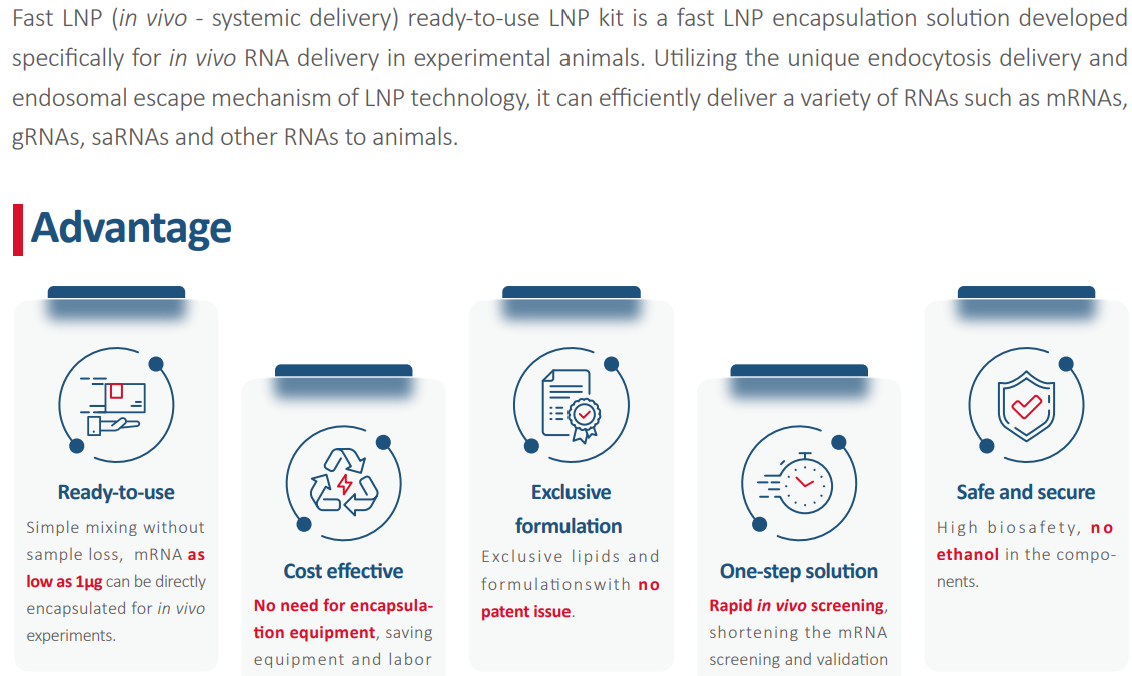
Fast LNP (in vivo - systemic delivery) ready-to-use LNP kit is a fast LNP encapsulation solution developed
specifically for in vivo RNA delivery in experimental animals. Utilizing the unique endocytosis delivery and
endosomal escape mechanism of LNP technology, it can efficiently deliver a variety of RNAs such as mRNAs,
gRNAs, saRNAs and other RNAs to animals.

Introduction
Applications
This product can transcend the cellular level validation and directly carry out ultra-fast and low-cost in vivo
validation, especially for the early stage of research with many mRNA sequences but the dosage of experimental samples is low. It can accurately and rapidly complete the validation and screening of the translational level and function of mRNAs in vivo.
Gentaur can provide in vivo validation service based on this product, directly provide in vivo expression efficiency results, with professional customized solutions to launch quality services.
Lieven Gevaert
Advantage
Safe and secure
High biosafety, no
ethanol in the components. One-step solution
Rapid in vivo screening,
shortening the mRNA
screening and validatioon
cycle.
Ready-to-use
Simple mixing without
sample loss, mRNA as
low as 1μg can be directly
encapsulated for in vivo
experiments.
Exclusive
formulation
- Fast LNP (in vivo - systemic delivery) reagents
- Fast LNP (in vivo - systemic delivery) Buffer
Intramuscular Injection
LNP prepared by microfluidics and Fast LNP (in vivo-systemic delivery) by Gentaur were used for intramuscular administration of LNP at a single dose of 7.5 μg
per mouse, followed by an intraperitoneal injection of luciferin atier 6 h, and then in vivo imaging of IVIS was performed. The results showed that the targeting
effect of Fast LNP (in vivo-systemic delivery) was comparable to that of micro fluidically encapsulated LNP in liver, spleen and muscle.
Conventional LNP
RLU (P/S)
By Microfluidic
Device LNP-1
- 1.00E+00
- 1.00E+01
- 1.00E+02
- 1.00E+03
- 1.00E+04
- 1.00E+05
- 1.00E+06
- 1.00E+07
- 1.00E+08
- 1.00E+09
- 1.00E+10
- LIVER
- SPLEEN
- MUSCLE
Fast LNP (in vivo)
Fast LNP(in vivo)
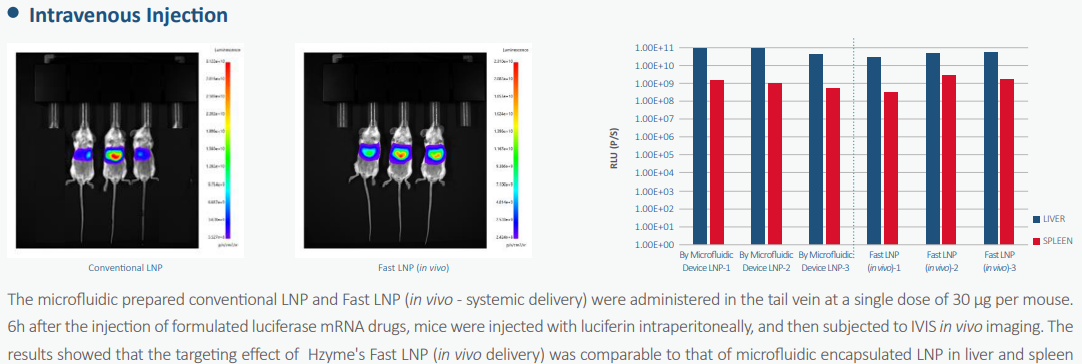
The microfluidic prepared LNP and Fast LNP (in vivo - systemic delivery) were administered subcutaneously at a single dose of 30 μg/each, and then injected
intraperitoneally with the luciferin ationer 6 h. The results showed that the subcutaneous.